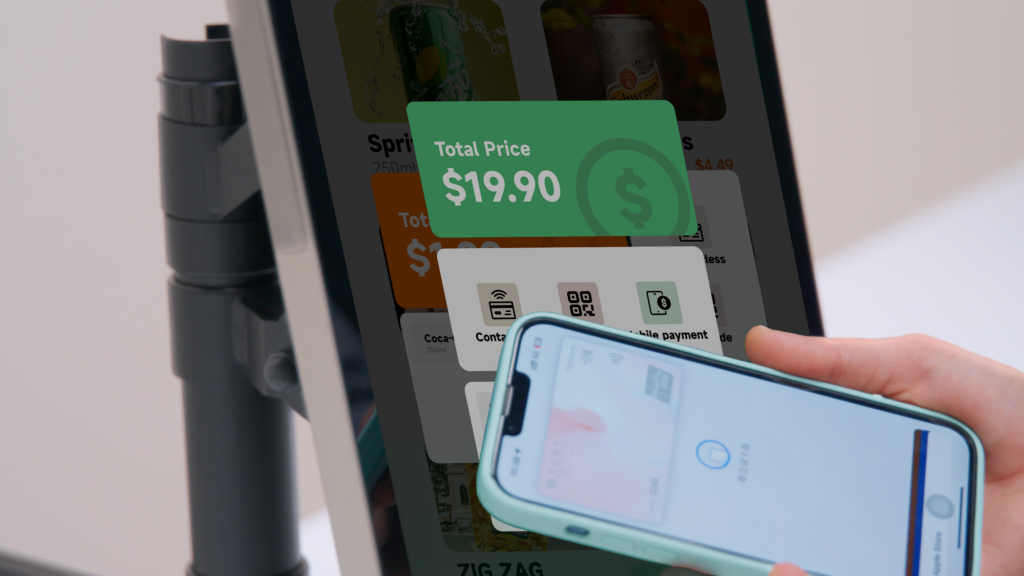
And Why Traditional Terminals Still Matter More Than Ever
Payment acceptance is no longer just about processing transactions, it has become a core driver of growth, customer experience, and operational agility.
Over the past decade, the payment industry has undergone a profound shift. Cash has rapidly declined, mobile wallets are surging, and contactless has become the default. In fact, over 90% of in-person payments in Europe are now contactless enabled,1 signaling a massive behavioral change in how consumers pay and how merchants accept payments.
Merchants are under pressure to:
- Reduce friction at checkout
- Keep supporting legacy payment methods
- Enable mobility across sales channels
- Scale faster with fewer operational constraints
At the center of this transformation is SoftPOS (Software Point of Sale): a technology focused on turning everyday smartphones into secure, contactless payment terminals. But despite the excitement, one thing should be made clear: this is not about replacing the old with the new. It’s about redefining the entire payment stack and solution for merchants.
What Is SoftPOS? Why Is It Spreading So Fast? SoftPOS enables merchants to accept contactless payments directly on NFC-enabled smartphones or tablets. This shift is happening at scale. The global SoftPOS market, valued at $365 million in 2024, is expected to reach $1.24 billion by 2030, growing at over 23% CAGR. 97% of new smartphones now come NFC-enabled, making SoftPOS instantly accessible.2
SoftPOS vs Traditional POS: the wrong question
A common narrative suggests that SoftPOS will replace traditional POS systems. In reality, that framing misses the point. SoftPOS and traditional POS solve different operational challenges, and the data supports this coexistence. In France, contactless now represents ~70% of POS transactions3, pushing merchants to upgrade (but not abandon) existing infrastructure.
These strengths don’t overlap but complement each other:
| SoftPOS excels where flexibility is critical | PCI remains essential where stability is key |
|---|---|
| – Mobile, on-the-go environments – Queue busting during peak traffic – Field services, pop-up commerce and delivery | – High-volume retail checkouts – Complex transactions and integrations – Environments requiring peripherals |
The future lies in hybrid payment setups
Forward‑thinking businesses should not be choosing between SoftPOS and traditional POS setups. Instead, they should look at combining them to build hybrid setups that are more resilient, more flexible, and more customer‑centric.
- Retailers use fixed terminals at checkout while equipping staff with Tap-to-Pay devices for in-aisle payments.
- Restaurants can combine central POS systems with tableside payment devices
- Large enterprises deploy Tap-to-Pay to empower staff with mobile checkout capabilities during peak traffic or events
The impact is measurable. NFC-based payments can increase transaction speed by up to 27%, which directly reduces queues, lowers abandonment, and boosts conversion. SoftPOS doesn’t replace traditional POS, it extends its reach. From queue busting in retail to tableside payments and on-the-go transactions, it unlocks use cases that fixed terminals alone were not designed to support.
A future-proof strategy starts with a simple shift in mindset:
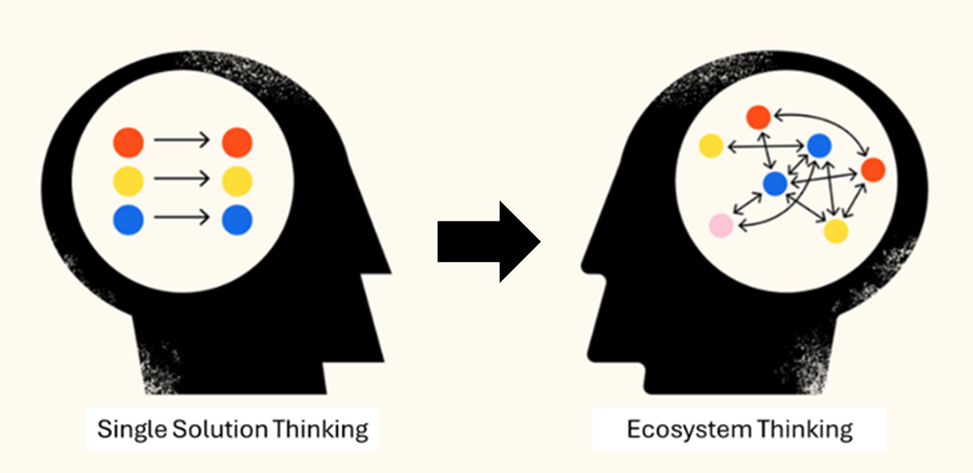
Why Hardware Still Plays a Critical Role
Despite the rise in software-based acceptance, traditional terminals are far from obsolete. In fact, it’s evolving. Android globalization on payment terminals has transformed payment dedicated devices into smart, multi-application powerhouses, extending the possibilities far beyond payment restricted ecosystem.
The global installed base of POS terminals is expected to reach over 229 million units by 2028, reflecting sustained demand for dedicated devices.
Hardware remains essential in three keys areas:
- High-performance environments
Supermarkets, big-box retailers, and transportation hubs require speed, uptime, and reliability. - Integrated ecosystems
Barcode scanning, receipt printing, cash management, and peripheral‑heavy workflows still depend on specialized devices. - Security layers
Specialized hardware security and certifications provide additional protection that complements software‑based security.
The real trend is not that traditional terminals are disappearing. It is that hardware is becoming smarter, more connected and more tightly integrated with software-driven payment experiences.
Building a Future-Proof Payment Strategy.
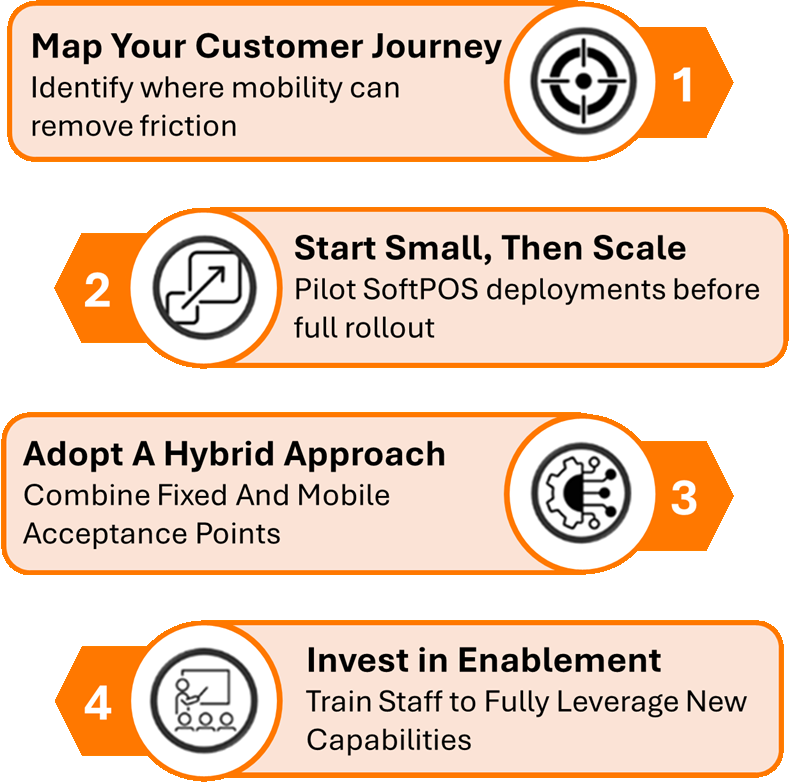
The challenge for merchants and ISVs is no longer whether to adopt SoftPOS, but how to integrate it effectively. SoftPOS brings mobility and scalability. Traditional POS brings stability and performance. Together, they create a payment ecosystem that is more flexible, more resilient, and more aligned with how modern commerce actually operates.
Conclusion: The Future of Payments Is Hybrid
The payment landscape in 2026 is defined by one word: convergence.
Contactless is becoming the norm, mobile-first experiences are expected and hardware continues to anchor reliability.
The real opportunity lies in bringing these elements together. Merchants who embrace this hybrid model will be best positioned to deliver seamless customer experiences, scale faster with lower operational complexity and unlock new revenue streams.
Stay In The Loop
Subscribe to the SUNMI Europe Newsletter
for curated updates on Technology, Partnerships, Upcoming Events, and more Exclusive SUNMI Europe Opportunities.
- “The Rise of NFC Payments” July 9, 2025, by David Valero Compte, VP Global Head of Enterprise Retail at Worldline ↩︎
- “SoftPOS Market Report (2025 – 2030)” by GrandView Research ↩︎
- Yahoo Finance ! “France POS Terminals Market Analysis and Forecast 2026-2031” January 26, 2026 ↩︎